What to Bring to a Paragliding Flight? Complete List and Practical Tips
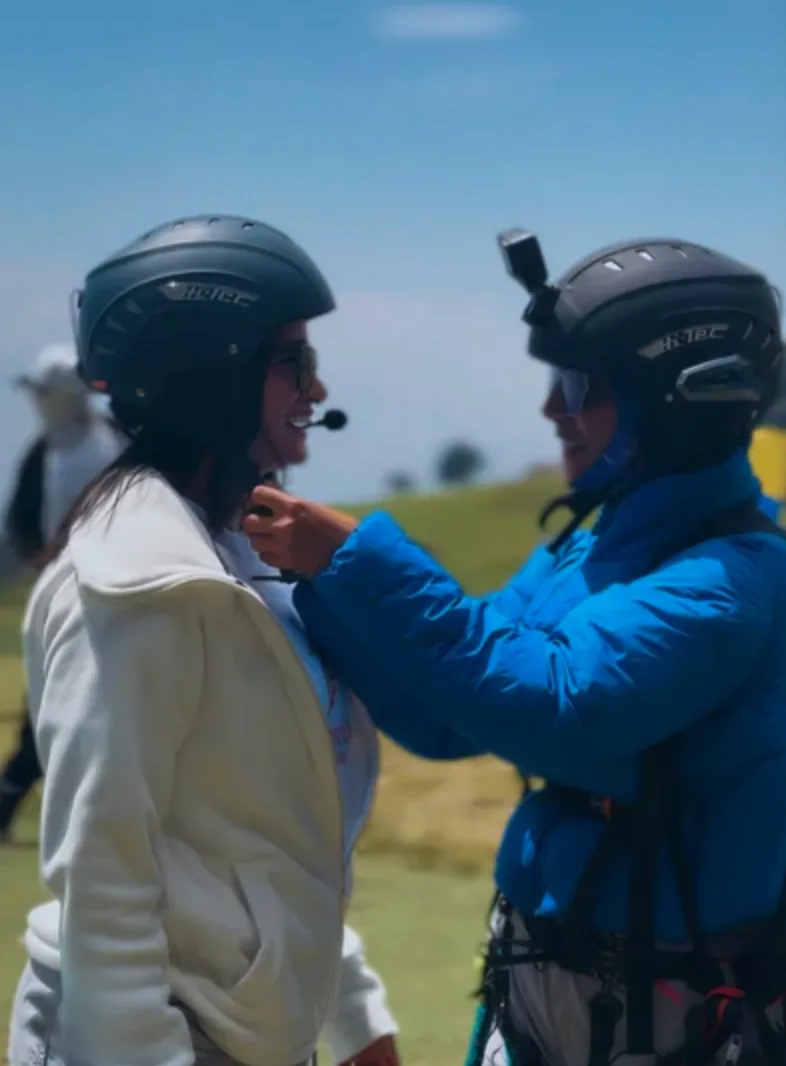
You've booked your paragliding flight in Medellín and the excitement grows with every passing hour. But the inevitable question comes up: "What do I wear? What do I bring?" Preparing properly for your flight can make the difference between a good experience and a perfect one. In this guide we give you the complete list of what to bring, what to avoid and the best tips to make your first paragliding flight absolutely unforgettable.
Clothing: what to wear to fly
Shoes: the most important thing
Footwear is probably the most important decision you'll make in your preparation. During takeoff you'll need to run a few meters downhill, and during landing you'll do the same. The wrong shoes can ruin these key moments.
- Ideal: Athletic sneakers with good grip, trekking boots or trail-running shoes. What matters is that they are closed, comfortable and won't slip off when you run.
- Acceptable: Closed casual shoes with a non-slip sole.
- Forbidden: Sandals, flip-flops, heels, dress shoes, crocs or any open footwear. If you arrive with this kind of footwear, the pilot may refuse to fly with you for safety reasons.
Tip: Tie your laces well before takeoff. A shoe that comes off during the flight is more than an annoyance; it can be a hazard.
Pants
The paragliding harness passes between the legs and around the thighs, so your choice of pants directly affects your comfort throughout the flight.
- Ideal: Jogger-style athletic pants, thick leggings, hiking pants or flexible fabric pants. Any garment that allows free movement and is comfortable under pressure around the legs.
- Acceptable: Jeans with some stretch.
- Avoid: Very tight or rigid jeans (the harness can be uncomfortable), very short shorts (the harness can rub against your skin), skirts or dresses.
Upper body
San Félix sits at 2,600 meters above sea level, and during the flight the wind chill drops several degrees due to wind speed. Dress in layers:
- Base layer: A comfortable short- or long-sleeve shirt.
- Outer layer: A light jacket, windbreaker or zip-up hoodie. Something that protects you from the wind but isn't too bulky so the harness fits well.
- For early flights (before 10 a.m.): A warmer jacket. Mornings in San Félix can be chilly, with temperatures around 14-18 degrees Celsius.
- For midday flights: A light layer may be enough, though it's always better to bring extra than to be cold.
Avoid: Long scarves, loose kerchiefs or any garment that could fly up and get tangled in the paraglider's lines.
Essential accessories
Sunglasses
Essential. At 2,600 meters UV radiation is significantly higher, and during the flight the wind can make your eyes water if you have no protection. Choose glasses that:
- Have good UV protection (category 3 or higher)
- Fit your face well (so they don't move in the wind)
- Ideally have a strap or retainer cord so they don't fall off
Note: Your pilot will provide a helmet, and most paragliding helmets have a visor. Even so, bring your glasses as a complement.
Sunscreen
Apply it generously at least 30 minutes before arriving in San Félix. Minimum recommended protection factor: SPF 50. Don't forget these areas that many people overlook:
- Ears
- Back of the neck
- Backs of the hands
- Lips (use a balm with sun protection)
Phone or camera
If you want to take your own photos or videos during the flight (in addition to the professional recording we provide), bring your phone with these precautions:
- Charged battery: At least 50% so it lasts the whole flight and the photos afterward.
- Safety strap: Tie your phone to your wrist or to the harness. A phone that falls from 500 meters up is never recovered.
- Free up space: In-flight videos take up quite a bit of memory. Make sure you have at least 2-3 GB available.
Important: At Alas Madrid Colombia we include 4K video and 360° photo recording in every package, so even if your phone runs out of battery, you'll have a professional keepsake of your flight.
What NOT to bring to your paragliding flight
Just as important as knowing what to bring is knowing what to leave at home or in the vehicle:
- Loose objects in your pockets: Keys, coins, bulky wallets. If they fall during the flight, they're lost forever. Leave what you can in your bag or with a companion.
- Valuable jewelry: Loose rings, long earrings, chains that could get tangled. If you wear an engagement or wedding ring, make sure it fits snugly.
- Umbrellas or parasols: If it rains, the flight is cancelled anyway.
- Large backpacks: You won't be able to carry them during the flight. If you bring one, it will have to stay with the ground crew.
- Lots of food: This is not the time for a picnic. A light snack is fine, but don't bring food you have to carry.
- Drone: Flying a drone in the paragliding takeoff area is dangerous and generally prohibited.
Eating before the flight
What you eat before flying can directly influence how you feel during the flight. Follow these recommendations:
What you should do
- Eat a light breakfast or lunch: A breakfast with fruit, toast, eggs or oatmeal is perfect. Lunch: a salad with protein, rice with chicken, something light and nutritious.
- Eat at least 1-2 hours before the flight: Give your body time to digest.
- Stay well hydrated: Drink water throughout the morning. Dehydration increases the likelihood of nausea.
- Bring a water bottle: To drink before and after the flight.
What you should avoid
- Heavy meals: Bandeja paisa, very greasy or spicy food. Your stomach will thank you.
- Too much coffee: One cup is fine, but don't overdo it. Excess caffeine can increase anxiety.
- Alcohol: Don't drink alcohol before the flight. If you went out partying the night before, consider rescheduling. A hangover and a paragliding flight are not a good combination.
- Fasting: Don't fly on a completely empty stomach either. Low blood sugar can cause dizziness or weakness.
Tips for managing nerves
It's completely normal to feel nervous before your first paragliding flight. In fact, the adrenaline is part of the experience. But if the nerves threaten to ruin your enjoyment, these tips will help:
- Get informed: Fear of the unknown is the biggest fear. You're already reading this article, so you're on the right track. The more you know about the process, the less anxiety you'll feel.
- Talk to your pilot: Before the flight, your pilot will give you a briefing. Don't hesitate to ask questions. They're used to nervous passengers and know exactly how to put you at ease.
- Breathe: Before takeoff, take three deep breaths. Inhale through your nose to a count of 4, hold for a count of 4, exhale through your mouth to a count of 6. This activates your parasympathetic nervous system and reduces anxiety.
- Don't watch accident videos: It's tempting to search online, but the algorithms will show you the worst of the worst. Those videos represent an infinitesimal fraction of the millions of safe flights carried out every year.
- Focus on the experience: Once you take off, the nervousness disappears in a matter of seconds. The view, the feeling of freedom and the peace you feel in the air replace any fear.
- Remember you can stop: If at the last moment you decide you don't want to fly, that's okay. No serious operator will force you to take off. But 99% of the people who reach the takeoff point end up flying and enjoy it enormously.
Final checklist: your printable list
Before leaving your hotel or lodging, check that you have everything you need:
- Closed, comfortable shoes (well tied)
- Long, flexible pants
- Comfortable shirt
- Jacket or windbreaker
- Sunglasses (with strap)
- SPF 50 sunscreen (already applied)
- Charged phone (with safety strap)
- Water bottle
- Cash for extras (food in San Félix, tips)
- ID document or passport
- A good mood and plenty of eagerness to fly
And what you should NOT bring:
- Open footwear
- Loose valuable objects
- Jewelry that could snag
- Heavy food in your stomach
- Excess luggage
Ready to fly?
With this list you're ready to enjoy the best paragliding experience in Medellín. Book your all-inclusive flight.
See Available Packages Book via WhatsApp